Part of “The Atlas of Corn and Soy” from the first half of the studio, “Seeds of Resistence,” led by Forbes Lipschitz
Completed October, 2020
Cover by Colin Martinez
From the introduction to the Atlas (co-written by M. McCahan and Bradley Reuschling, MLA):
In this atlas, we observe the ways in which the agricultural system and landscape of the United States are influenced and affected by the commodification of corn and soy. In researching a system that is defined by privatization and displacement, material transformation, and negative external effects, we hope to draw back the polished curtain of modern capitalism and offer a critical view of the realities caused by commodification. To do so, we utilize Marx’s theory of the fetishization of the commodity. In his writing Marx says that, “A commodity appears, at first sight, a very trivial thing, and easily understood. Its analysis shows that it is, a very queer thing, abounding in metaphysical subtleties and theological niceties.”[1] We argue that this definition of commodity strongly applies to corn and soy, and in the second half of our project we aim to confront the commodification of food and offer forms of resistance to that cycle.
[1]C.J. Arthur, Marx’s Capital: A Student Edition, London: Lawrence & Wishart, 1992: 31. muse.jhu.edu/book/34787.
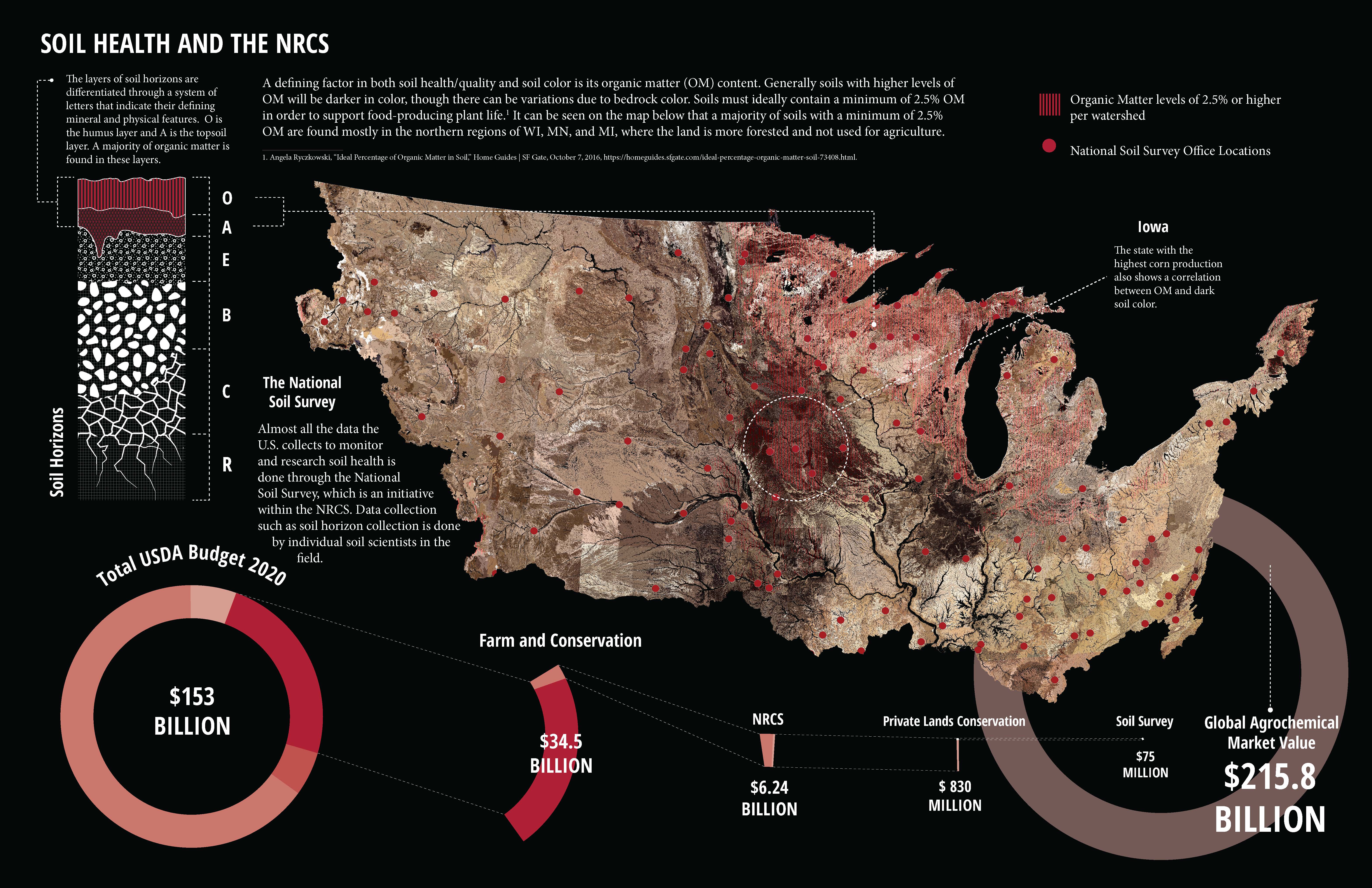
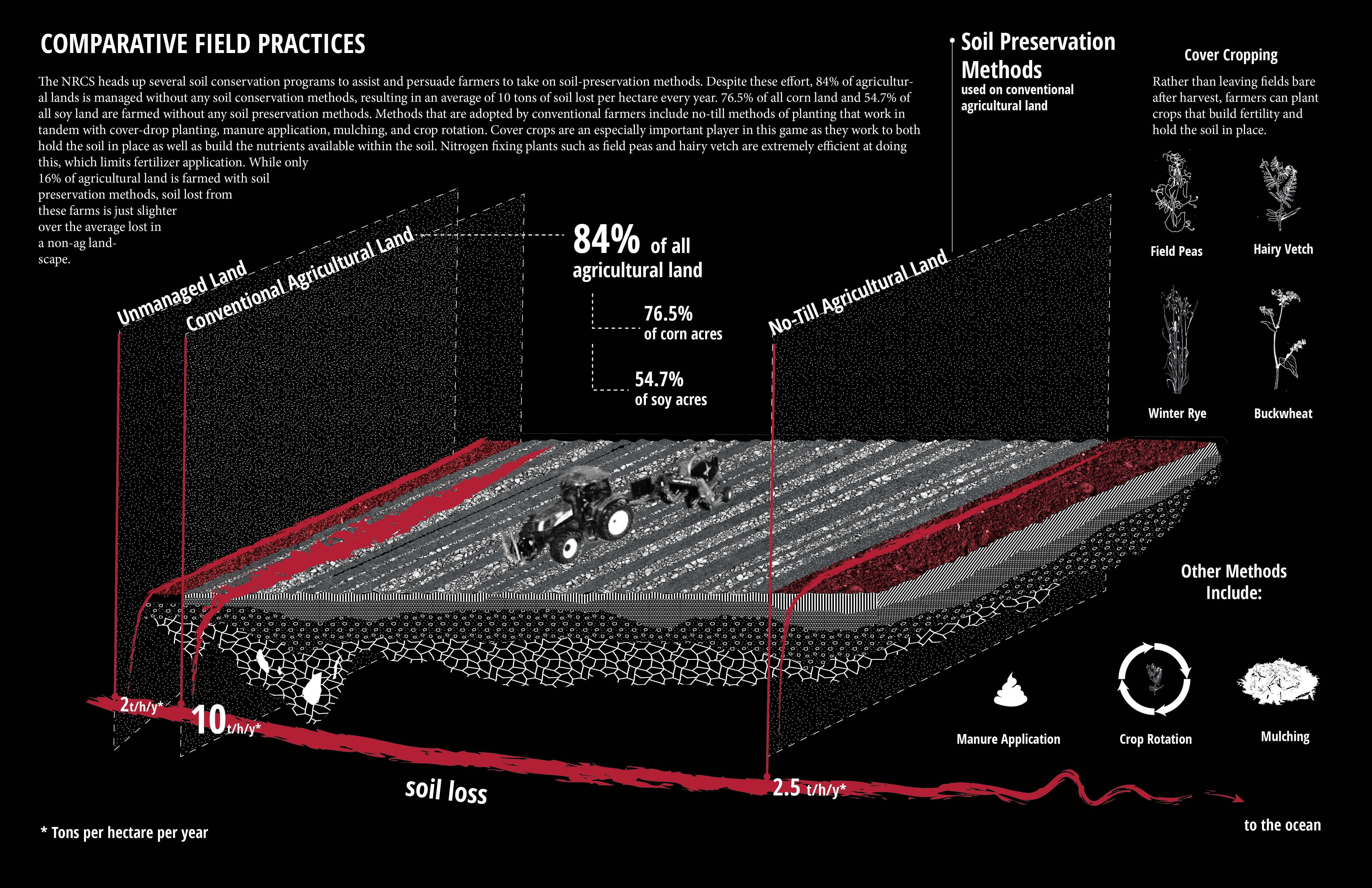
In my portion of the Atlas, I used publicly available GIS datasets to map the correlations between soils, corn & soy agriculture, erosion, institutional investment and soil color. Finally, I work to diagram a comparison of farming methods and their effects on soil loss.

 Molly McCahan