Part of “The Joy of Decommodification,” from the second half the studio, “Seeds of Resistance” led by Forbes Lipschitz
Completed December, 2020
From the introduction to my chapter on wild food foraging: In distinct contrast to the hyper-tech driven agricultural systems that produce corn and soy is the little-managed “wild” systems that used to dominate and now fill the margins of the Cornbelt region. These wild places hold the native food crops that used to play a significant role in the American/Turtle Island diet, especially before the settler-colonialism that brought industrial agriculture to the North American continent.
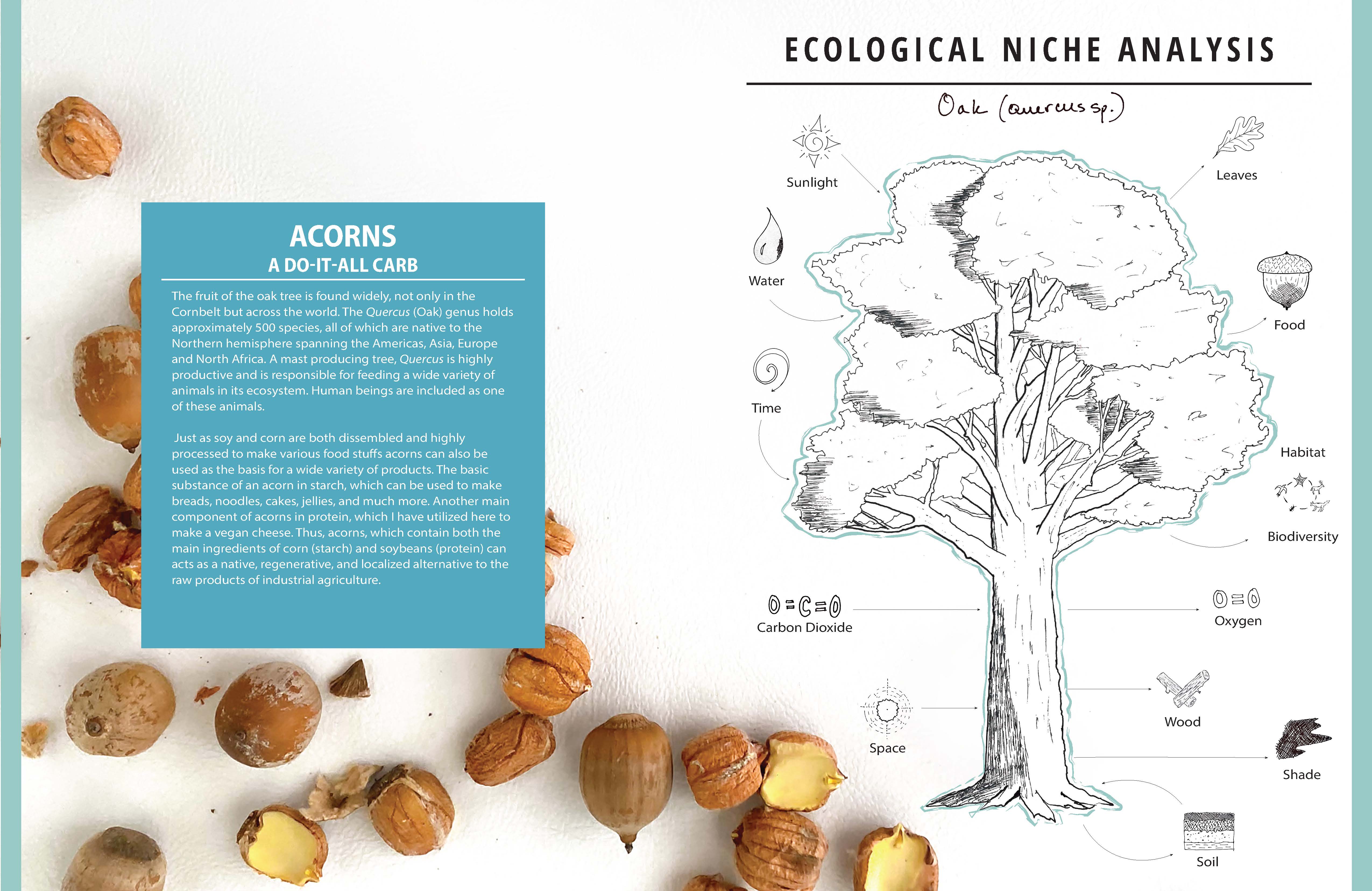
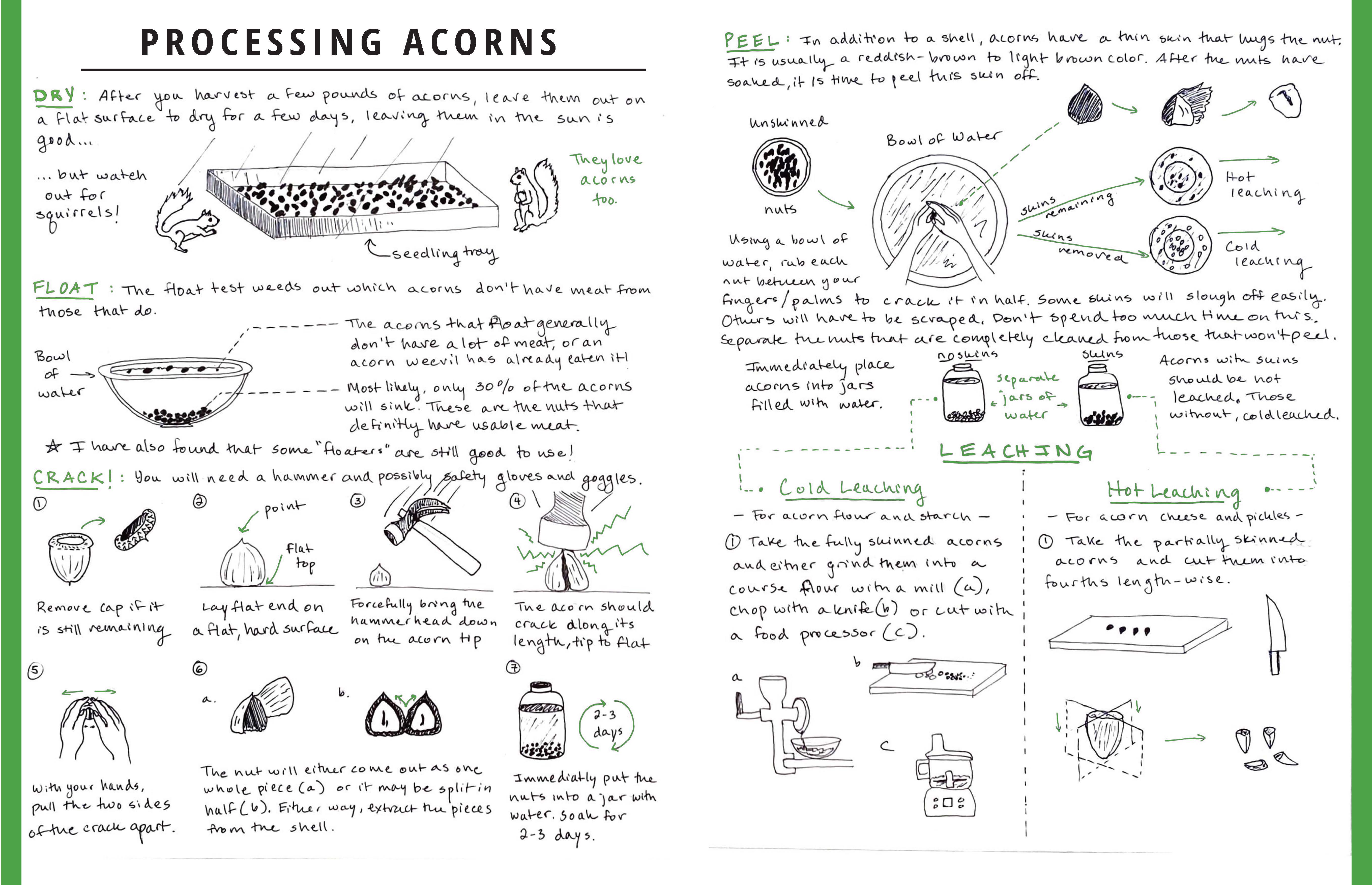
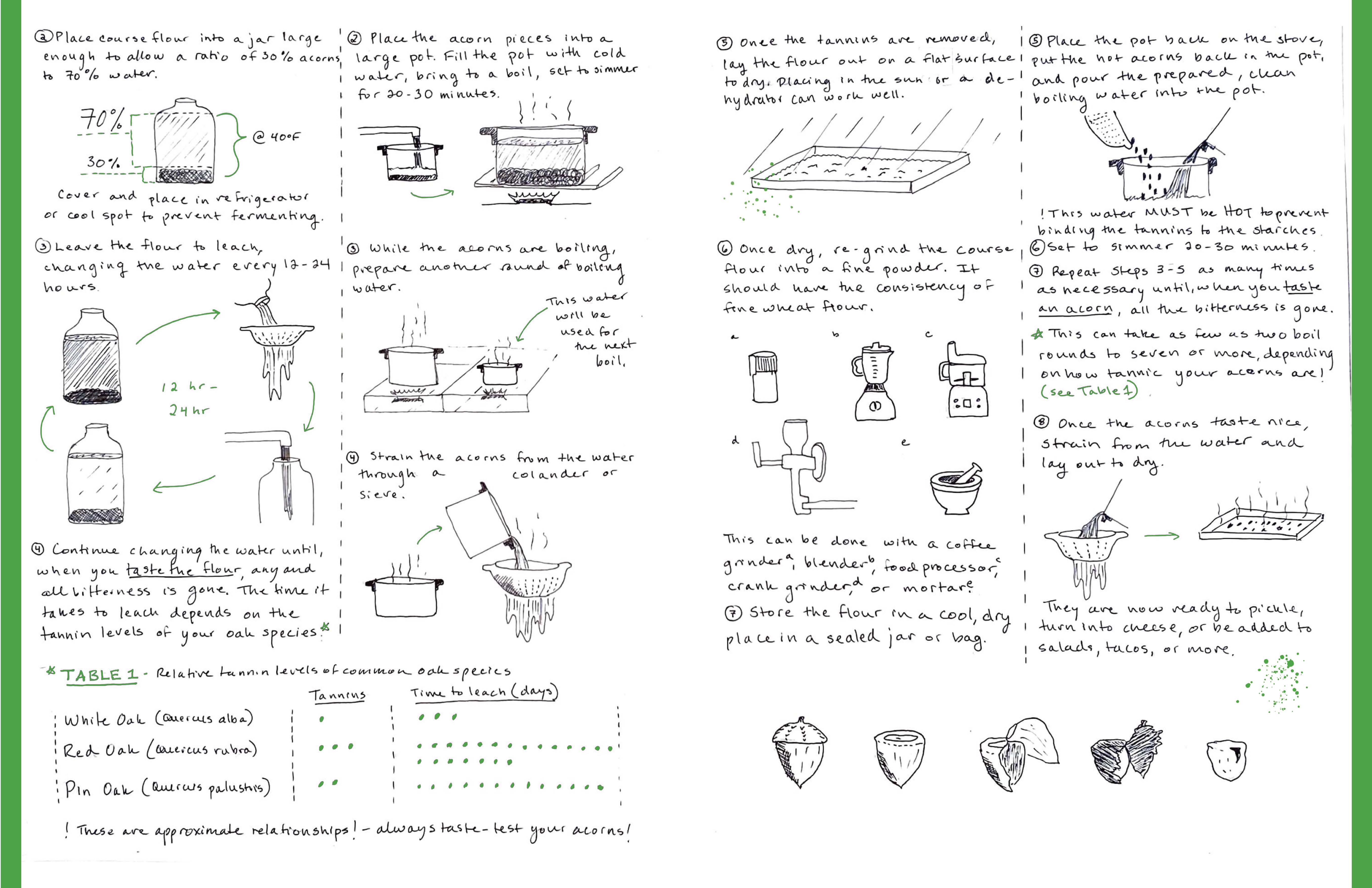
Engaging with these foods is a deeply subversive act. Wild food gathering requires a person to be physically involved with the landscape. It requires a certain ecological knowledge. It requires time and labor, and it requires ethics. In this specific study, I have landed on the deep exploration of acorns and their uses. The following pages dive deeply into the power and uses of oaks and acorns as well as why they are an appropriate counterpoint to both corn and soy as a biological substance.
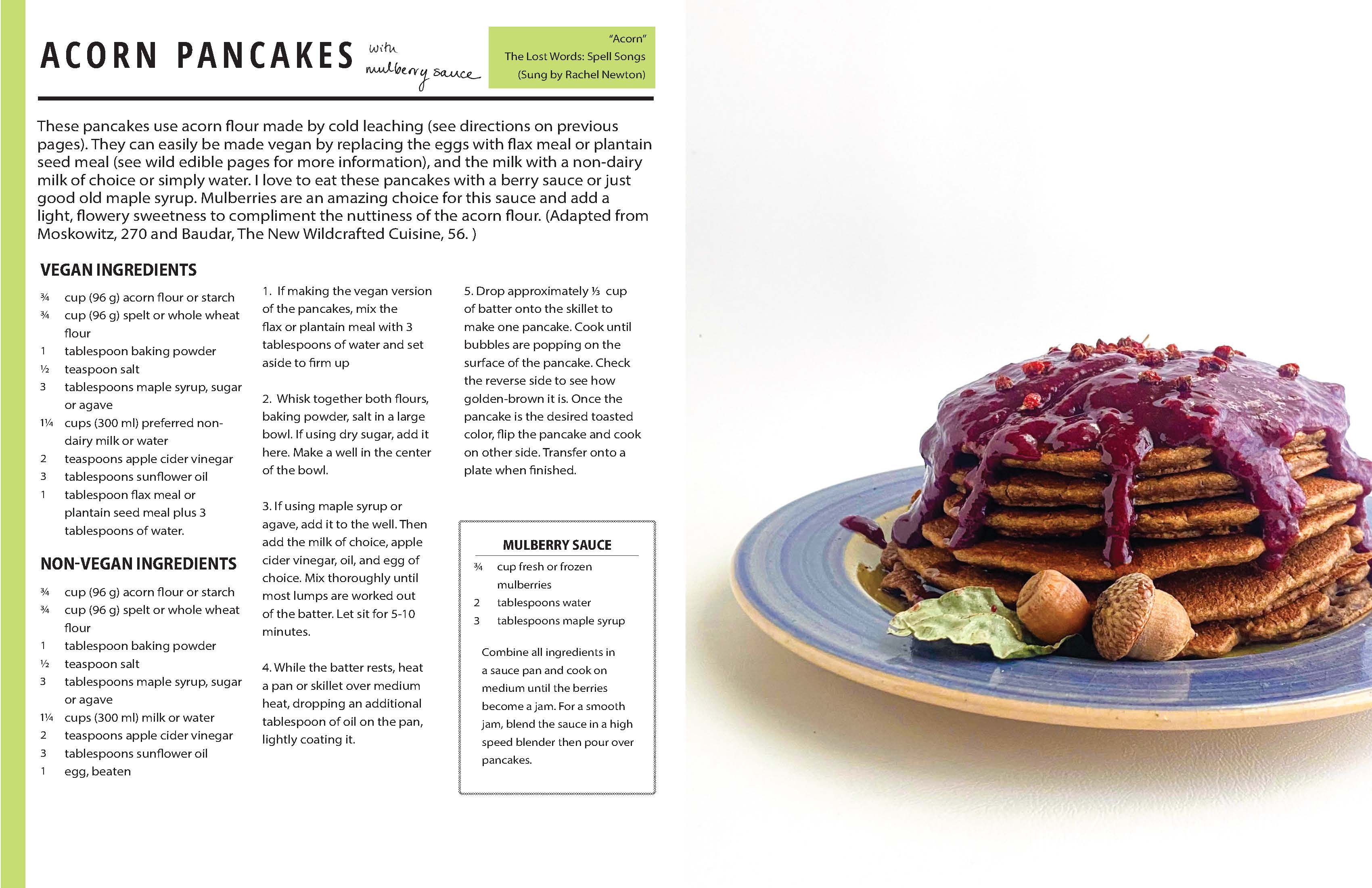
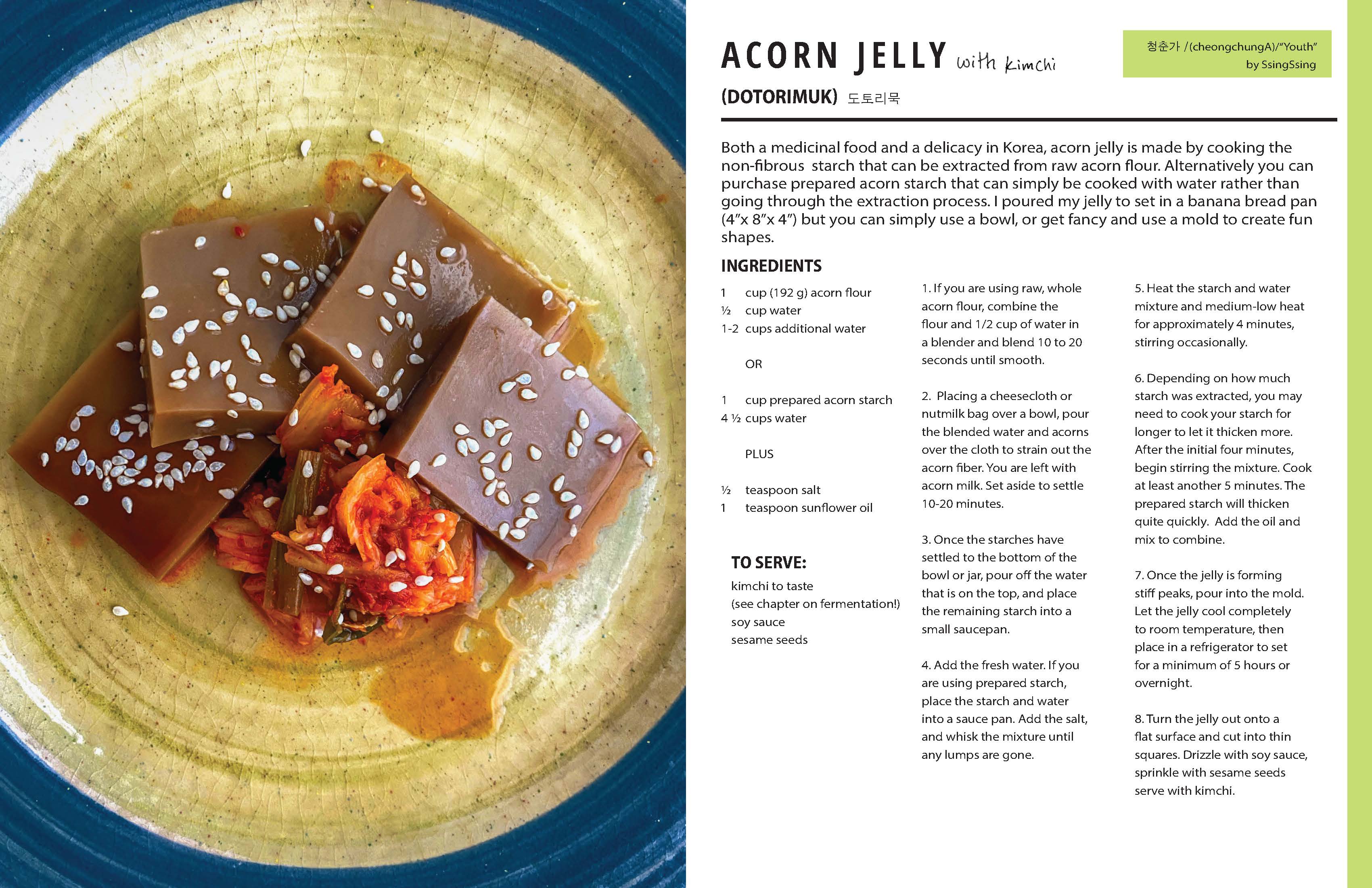
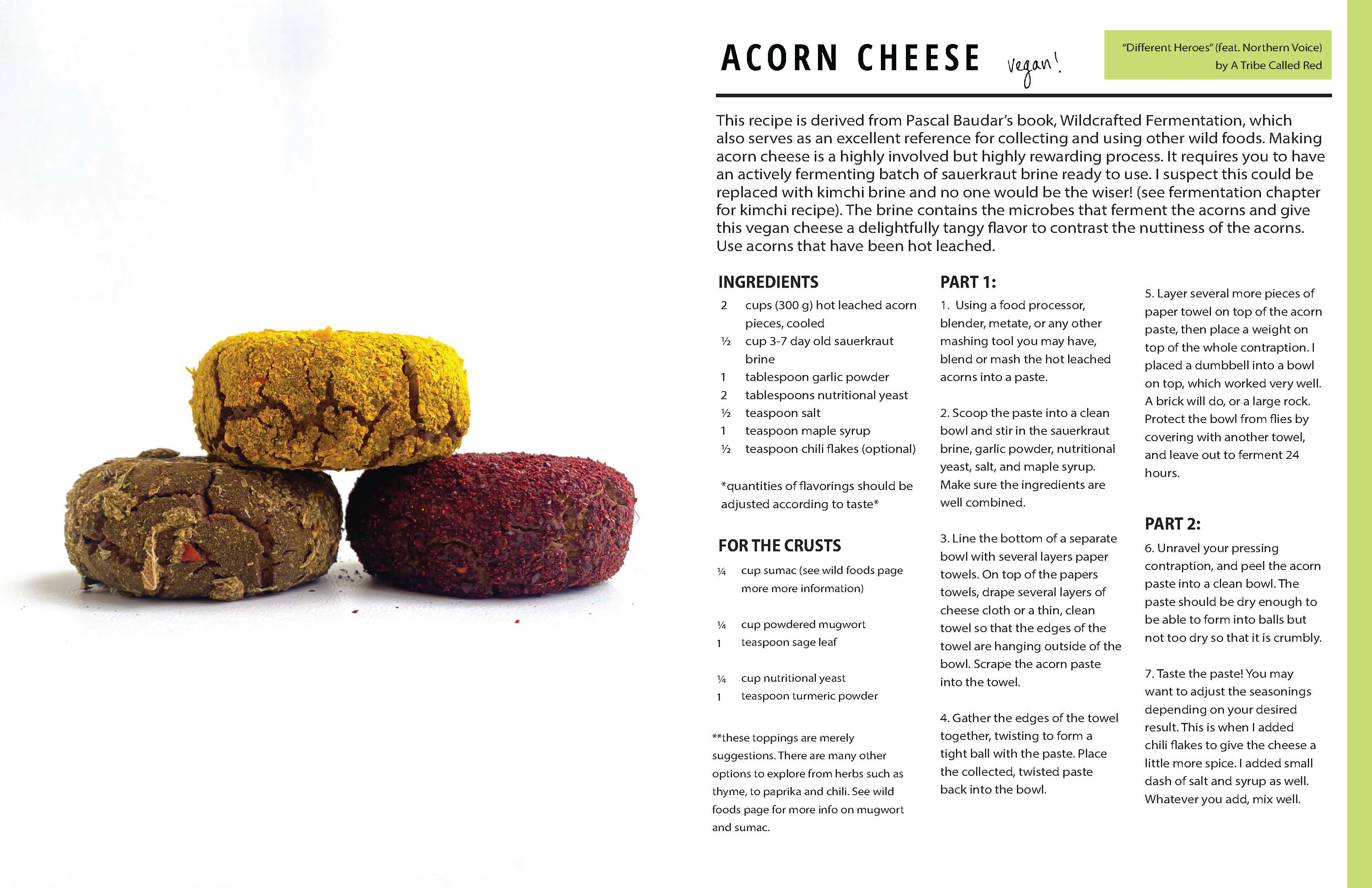
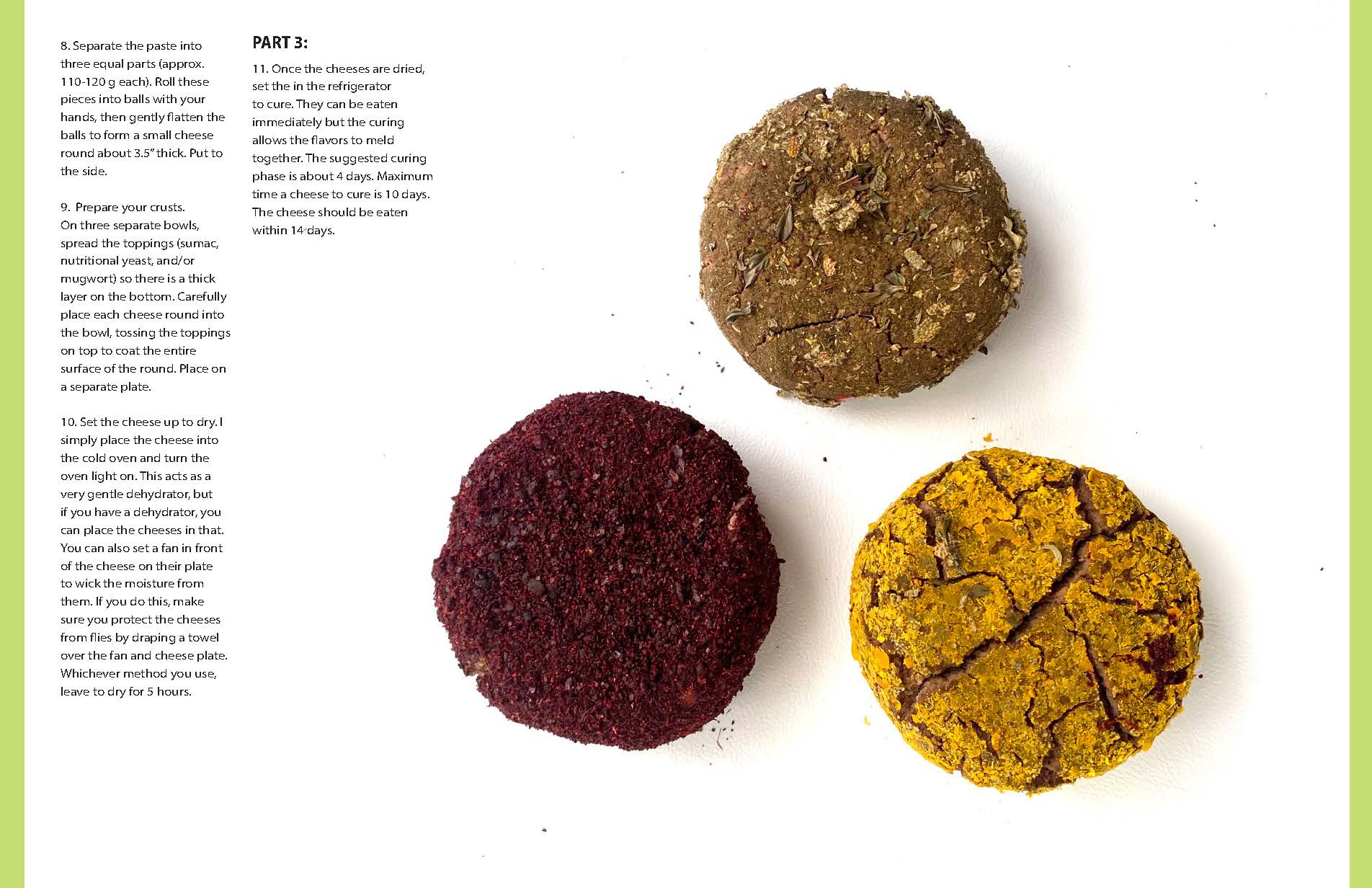
The final products of this project are a series of magazine spreads detailing methods of collecting and cooking acorns. The spreads were joined with other student’s work to form a cookbook that challenges the typical engagement with our industrialized food system.


 Molly McCahan